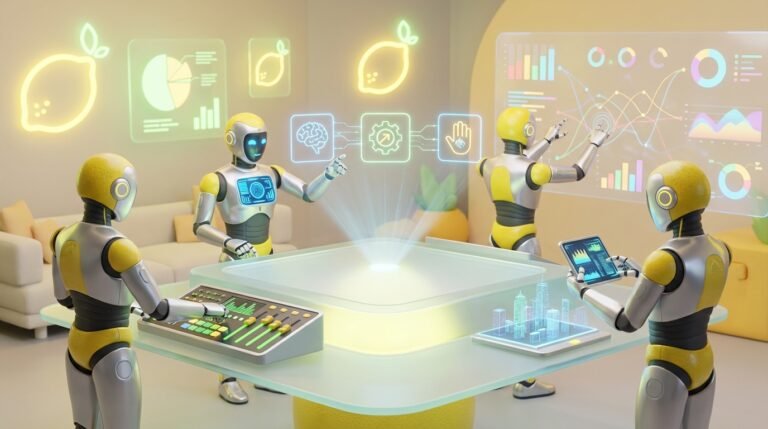
How to Build a Multi-Agent AI Workflow (No Code Required)

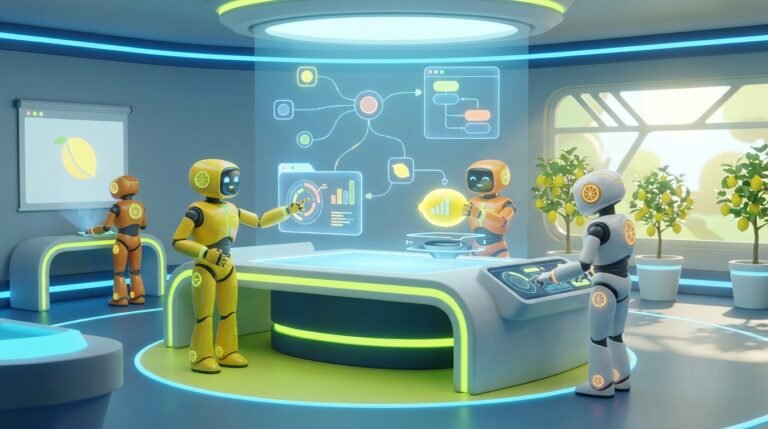
A multi-agent AI workflow uses multiple specialized AI agents working together – one handles email, another manages scheduling, a third processes documents. Instead of one AI doing everything poorly, each agent masters its domain. You can build these workflows without code on platforms like LaunchLemonade. What Is a Multi-Agent AI Workflow and Why Does It […]
How to Build a Multi-Agent AI Team for Your Business (Without a Developer)

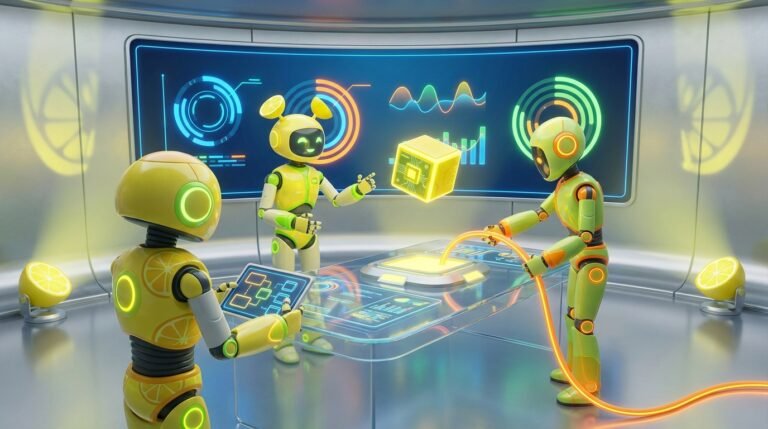
A multi-agent AI team is a group of specialized AI assistants that work together to handle different parts of your business. Instead of one assistant trying to do everything, you build focused agents for support, research, onboarding, and more. Platforms like LaunchLemonade let you create multi-agent workflows in minutes with no code. Here is how […]
How to Train an AI Agent on Your Business Knowledge (Step-by-Step Guide)

You can train an AI assistant on your business knowledge in under 30 minutes by uploading your documents, setting accuracy guardrails, and running structured tests. The key is choosing the right files, organizing them by topic, and verifying answers against your source material. This guide walks through every step with specific file types, common mistakes, and a […]
10 No-Code AI Tools That Actually Work in 2026 (Tested)

The best no-code AI tools in 2026 fall into four categories: AI agent builders (LaunchLemonade, Sintra AI), workflow automation (Lindy AI, Make, Zapier), conversational AI (Voiceflow, Botpress), and AI-powered productivity (You.com, Notion AI, Gamma). The right choice depends on whether you need to delegate business tasks, automate workflows, build chatbots, or enhance personal productivity. All […]
How to Write AI System Prompts That Actually Work (5 Steps)

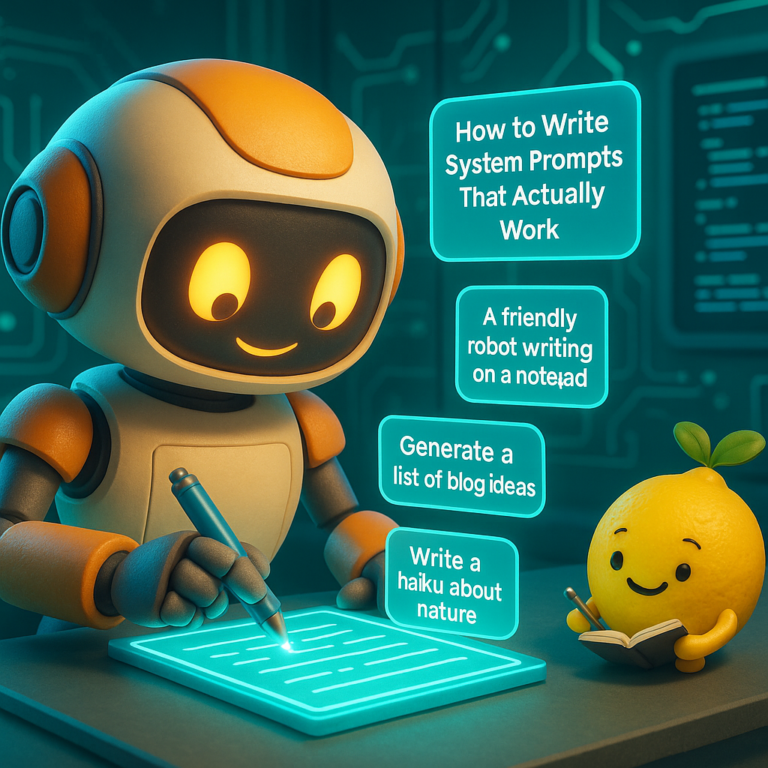
A system prompt is a set of instructions that tells an AI how to behave before the user starts chatting. The best system prompts follow a 5-step structure: define the role, set the context, specify the task format, add constraints, and include examples. A well-written system prompt can transform a generic AI chatbot into a […]
Build Human in the Loop AI Agents That Ask For Approval

You can build AI that asks before acting by integrating confirmation checkpoints directly into your agent’s instructions. This approach, often referred to as a Human in the Loop system, ensures that users define which actions require approval before execution. Consequently, you train the agent to pause and present options rather than executing tasks independently. This method bridges […]
How to Build an AI Agent Without Developers

You essentially do not need a large technical team to build an AI agent successfully. In fact, success primarily depends on clarity regarding what the agent must do and how it should behave. Although most businesses already understand their internal workflows thoroughly, the real challenge involves turning that understanding into structured instructions. Consequently, a system can only […]
How I Built an AI That Sounds Like Me

Voice often appears to be a unique personality trait; however, it is actually a distinct, observable pattern. Specifically, the way I explain concepts, the vocabulary I avoid, and my sentence rhythms all form a describable structure. Therefore, understanding this pattern was the primary step in my journey. Subsequently, I realized that the process of how I […]
Turn Your Explanations Into AI Tools Without Coding

Surprisingly, creating efficient AI Tools Without Coding is much easier than most people imagine. If you can clearly explain how a specific task should happen, you possesses the exact capability to build AI to assist with it. In reality, the true requirement for building powerful systems is the ability to articulate a process, rather than having advanced […]
What Are Three Simple Ideas for Building Better AI?

Creating reliable systems rarely starts with advanced features. Instead, success begins with simple concepts applied consistently. Building better AI requires a focus on refined workflow rather than just technical complexity. In fact, most struggles originate from overcomplicating the setup processes or ignoring how people actually work. Moreover, high-quality systems feel calm and predictable. Ultimately, intentional design choices drive these positive outcomes […]