Turn Your Knowledge Into a Useful, Trustworthy Offer
Your expertise already exists in frameworks, questions, examples, and decisions. The challenge is turning that knowledge into an experience people can use between conversations with you. If you want to monetise expertise with AI, start with a specific customer problem, not a promise that a chatbot can replace your judgment.
Quick Answer
A paid AI coach turns an expert’s materials into an interactive service for a defined audience. To monetise expertise with AI, choose one problem, prepare your content, test answers, and create a clear offer. Set boundaries, explain the limitations, and provide human support when appropriate.
Summary
A paid AI coach is an interactive product built around an expert’s knowledge and a specific customer need. Creators should evaluate knowledge quality, access, ongoing costs, and safety before selling. LaunchLemonade is one option for building and sharing an assistant, while other platforms may suit different workflows.
What This Guide Covers
- How to turn a method into a focused coaching offer
- Which materials, boundaries, and tests to prepare
- How three platforms compare for different needs
- How to think about pricing, costs, and launch readiness
What Does It Mean to Monetise Expertise With AI?
Monetising expertise with AI means packaging your knowledge into an AI-supported product that customers pay to use. A paid AI coach is an interactive service that helps a defined audience apply an expert’s guidance. The value comes from the problem it addresses, not simply from the AI model behind it.
For example, a leadership coach might help new managers prepare for difficult conversations. A writing consultant could help founders develop a clearer first draft of a customer email.
Neither product needs to answer every question in its field. A narrower offer makes your advice easier to organise, test, and explain.
What Customers Are Actually Buying
Customers are not necessarily paying for access to a model. They may be paying for:
- A structured way to apply your method
- Guidance tailored to a specific situation
- Access to your material in a conversational format
- Practice between workshops or coaching sessions
- A starting point for a task they find difficult
That distinction matters. A useful coach should help a customer make progress on a recognisable task. It should also tell them when the task needs a person.
Is an AI Coach the Same as Human Coaching?
No. A human coach can build a relationship, notice context, exercise professional judgment, and take responsibility within an agreed engagement. An AI coach generates responses from its configuration and available information. It can support reflection and practice, but its output can be incomplete or wrong.
The NIST Generative AI Profile offers a risk-management framework for designing and evaluating generative AI systems. For a coaching product, that means considering reliability and oversight before inviting customers in.
A practical starting position is to treat the AI coach as a structured companion, not an unsupervised replacement for a qualified professional.
Which Expertise Makes a Strong AI Coaching Offer?
A strong AI coaching offer starts with repeatable guidance for a clearly defined audience. The most suitable work has recognisable questions, teachable principles, and boundaries an assistant can follow. High-stakes decisions, confidential material, and situations requiring professional judgment need extra care or a different delivery model.
Look at your existing work for patterns. Which questions do clients ask repeatedly? Which exercises can a person complete independently? Where do you already use a consistent framework?
Find a Narrow Starting Point
| Expertise | Possible AI Coach Focus | Useful Boundary |
|---|---|---|
| Leadership | Practise preparing for feedback conversations | Does not make employment decisions |
| Writing | Develop a clearer first draft for a defined audience | Does not guarantee accuracy or publication |
| Sales | Prepare discovery questions for a prospect meeting | Does not make unsupported claims about prospects |
| Productivity | Break a project into a manageable weekly plan | Does not replace workplace or medical advice |
| Learning design | Turn learning objectives into practice questions | Does not certify competence |
These are possible product directions, not evidence that customers will pay for them. Validate each one with your intended audience.
Use the Coach Readiness Scorecard
Before you build, rate each criterion from zero to two:
- 0: Not yet defined
- 1: Partly defined or untested
- 2: Clear and supported by usable material
| Criterion | Question to Ask | Score |
|---|---|---|
| Audience | Can you name the intended user and their context? | 0 to 2 |
| Problem | Can you describe one task the coach will help with? | 0 to 2 |
| Knowledge | Do you have permission to use relevant, current material? | 0 to 2 |
| Boundaries | Can you identify questions the coach should not answer? | 0 to 2 |
| Evaluation | Do you have examples of good and unacceptable responses? | 0 to 2 |
| Offer | Can you explain what is included and how customers receive it? | 0 to 2 |
A score of 10 to 12 suggests you have enough definition for a small pilot. A score of 6 to 9 points to gaps worth addressing first. Below 6, refine the audience and use case before choosing software.
This is an editorial planning tool, not a validated assessment or a guarantee of commercial success. Treat any missing safety boundary or missing permission as a stop sign, regardless of the total.
What Should Your Paid AI Coach Offer?
A paid AI coach should offer a clear outcome, a defined experience, and honest limits. Customers need to understand what they receive, how they access it, and whether human support is included. A focused offer is easier to test than a broad promise to solve every problem in your field.
Start with this sentence:
This AI coach helps a specific audience complete a specific task using a named method, with clear limits and a defined support route.
Then fill in the details without promising results you cannot substantiate.
Choose the Customer Experience
| Offer Structure | What the Customer Receives | Main Consideration |
|---|---|---|
| Standalone AI coach | Access to a defined AI-supported experience | The coach must be useful without assuming human review |
| Coaching companion | AI practice between human sessions | Explain which responses receive human attention |
| Course companion | An interactive way to explore course material | Make clear whether course access is included |
| Team resource | A shared assistant for a defined team use case | Check access controls, permissions, and procurement needs |
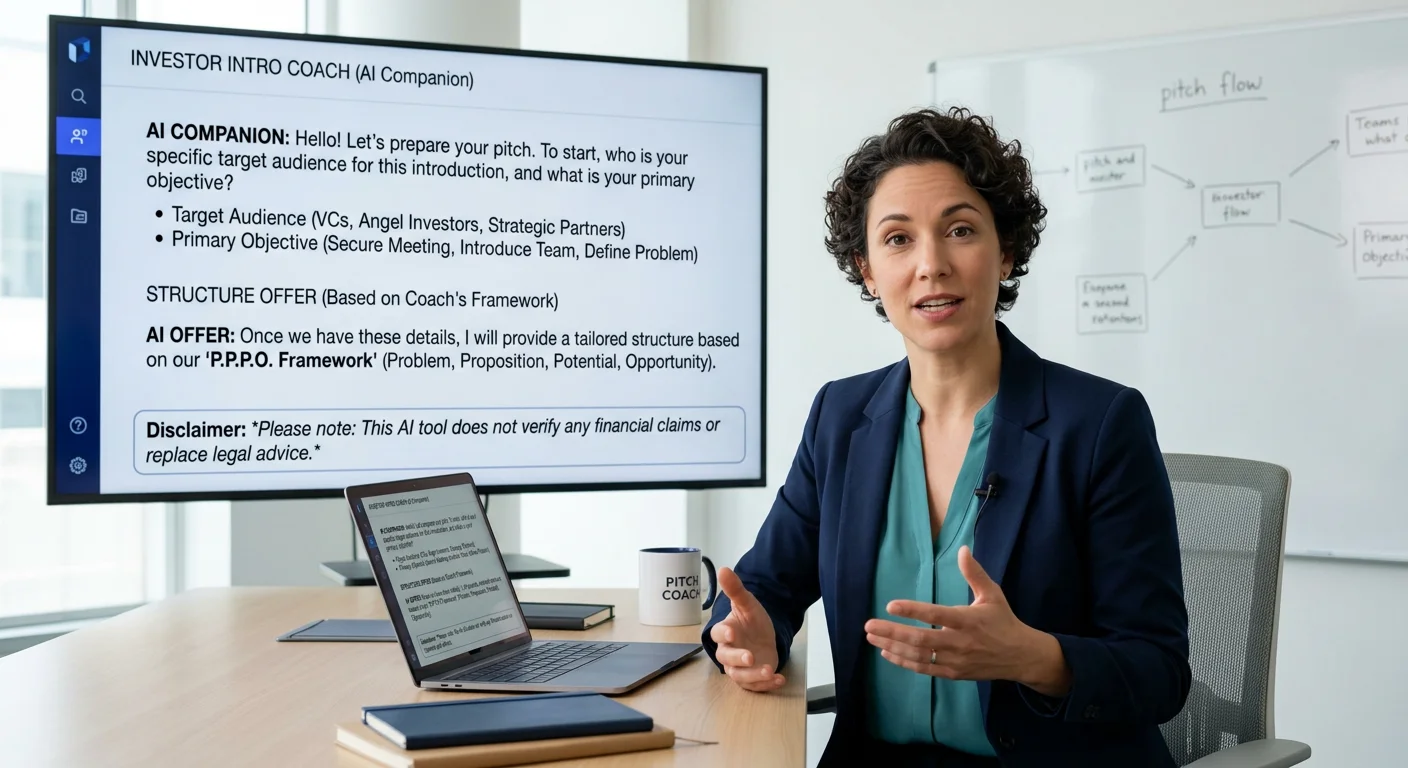
The creator could sell access as a standalone resource or include it with a workshop. Neither structure guarantees sales. Each needs testing with prospective customers.
Make the Promise Specific
Compare these two descriptions:
- Too broad: “Your personal AI business coach for every decision.”
- More useful: “Practise structuring your next client discovery conversation using a repeatable question framework.”
The second version names an audience task and gives the creator something observable to evaluate. It also leaves room to explain where a human conversation remains necessary.
If you want to monetise expertise with AI, make the offer about a customer’s progress, not your content library alone.
How Do You Prepare Your Knowledge for an AI Coach?
Prepare AI coaching knowledge by selecting material you can use, organising it by topic, and removing unnecessary confidential information. Clear source material helps you evaluate whether responses reflect your method. Adding documents does not guarantee accurate answers, so testing and ongoing review remain essential.
Start with a small set of high-quality materials rather than every document you have ever produced.
Build a Useful Knowledge Pack
Consider including:
- A method overview: Your central principles and when they apply.
- Step-by-step exercises: Activities customers can complete independently.
- Frequently asked questions: Real questions and your approved answers.
- Examples: Representative situations with sensitive details removed.
- Decision boundaries: When the assistant should decline, qualify, or suggest human help.
- A terminology guide: Definitions for phrases customers may misunderstand.
Give each document a clear title and review date. If two materials contradict one another, resolve the conflict before adding both.
Check Rights and Privacy
Use material you own or have permission to use for the intended purpose. Do not assume that access to a client document gives you permission to include it in a customer-facing product.
The U.S. Copyright Office’s AI resource explains that AI raises separate questions about source material and generated outputs. Its analysis concerns U.S. law. Requirements elsewhere may differ, so obtain advice appropriate to your jurisdiction and contracts.
Also review:
- Whether a client’s identity or confidential context appears in examples
- What your provider says about storage, retention, and model use
- Who can access the source material and customer conversations
- How customers can raise concerns or request support
- Whether your privacy notice accurately describes the service
Do not promise that information is private, deleted, or excluded from model training without checking the specific provider and configuration.
Write Instructions for Behaviour
A useful instruction set describes the coach’s role and limits in plain language. Include:
- Who the customer is
- Which problem the assistant helps address
- What questions it should ask before suggesting an answer
- Which source materials represent your method
- What it should do when information is missing
- When it should recommend a human professional
Instructions are not a complete security boundary. Test them against ordinary mistakes and attempts to make the coach ignore its role.
Which Platforms Can Help You Build an AI Coach?
LaunchLemonade, Delphi, and MindStudio each offer a different starting point for an AI-supported coaching product. Compare them using the same criteria: knowledge setup, customer access, commercial fit, cost, and limits. As of November 2026, check current availability and payment terms directly before committing.
The descriptions below rely on available documentation and do not claim hands-on testing. A platform that can share an assistant does not automatically meet every creator’s billing, privacy, or support requirements.
Tools at a Glance
| Tool | Best For | Key Strength | Key Limitation | Starting Price | Best Fit |
|---|---|---|---|---|---|
| LaunchLemonade | Building and sharing an assistant using your knowledge | Plain-English assistant creation | Selling terms and eligibility need confirmation | Check current pricing | Professionals and small teams exploring an AI offer |
| Delphi | Creating an AI representation of an individual’s knowledge | Multiple content types and public or private visibility | Paid plans and advanced features may exceed some pilot budgets | Check current pricing | Experts focused on a personal knowledge experience |
| MindStudio | Designing AI agents with knowledge and workflows | Data sources and workflow editor | A creator may need additional setup for a paid customer experience | Check current pricing | Builders comfortable designing a more structured workflow |
LaunchLemonade
LaunchLemonade is an AI agent platform for professionals and small teams who build assistants using plain English and their own knowledge. The available product information describes creating an assistant, adding knowledge, sharing or embedding it, and selling an assistant in the store.
The LaunchLemonade builder platform is a relevant starting point for creators exploring that approach.
Strengths
- Plain-English assistant creation can suit a non-technical expert.
- Knowledge, sharing, and embedding support more than an internal-only prototype.
Limitations
- Confirm current selling eligibility, payment setup, fees, and customer access before designing your offer around them.
- AI answers still require your own evaluation, maintenance, and clear boundaries.
For a team-led offer, explore the LaunchLemonade teams platform and confirm which controls apply to your chosen plan.
Delphi
Delphi’s knowledge documentation describes adding materials such as files, questions and answers, and web content. Its settings documentation describes public and private visibility.
Strengths
- The product centres on representing an individual’s knowledge and perspective.
- Multiple knowledge formats can suit experts whose material is spread across different media.
Limitations
- Paid plans and feature availability should be checked against the budget for a small pilot.
- Confirm how you would charge your own customers and manage their access before treating it as a paid coaching storefront.
MindStudio
MindStudio’s data source documentation describes using files to provide domain-specific context. Its editor documentation describes workflows and user inputs.
Strengths
- Knowledge sources can support responses grounded in selected material.
- A workflow editor can suit a product with several structured steps.
Limitations
- A workflow-based build may require more design work than an expert wants for a first pilot.
- Confirm payment, access, and deployment arrangements for your use case. The pricing page describes legacy MindStudio plans alongside Remy, so check which product and terms apply.
Make the Platform Decision
| If You Need… | Consider | Why |
|---|---|---|
| Plain-English assistant creation and a potential route to sharing or selling | LaunchLemonade | Its knowledge-base description combines assistant creation, knowledge, and publishing options |
| An AI experience centred on an individual expert’s content | Delphi | Its documentation focuses on an individual knowledge experience |
| A more structured agent workflow using source files | MindStudio | Its documentation describes data sources and workflow components |
| A verified payment arrangement before launch | Contact your shortlisted providers | Payment methods, fees, eligibility, and access controls need direct confirmation |
The best choice is the one that supports your actual offer and budget. If you plan to monetise expertise with AI, test the complete customer journey before deciding that a platform fits.
How Should You Price an AI Coaching Offer?
Price an AI coaching offer by considering customer value, delivery costs, usage limits, and the support you provide. A standalone assistant and a programme with human coaching have different economics. Start with a testable price and explain what customers receive, rather than presenting a fee as a guaranteed market rate.
There is no universal price for a paid AI coach. Your audience, subject, included support, and cost structure all matter.
Compare Common Pricing Structures
Stripe’s recurring pricing guide describes models including flat-rate, per-seat, tiered, and usage-based pricing. These are general billing models, not a claim that every AI platform supports them.
| Pricing Model | Potential Fit | Question to Resolve |
|---|---|---|
| Monthly access | Ongoing practice or recurring reference | What happens when usage costs rise? |
| One-time purchase | A time-limited resource or fixed programme | How long will access and updates continue? |
| Bundled with coaching | Support between human sessions | Which services are human, and which are automated? |
| Per-seat team access | A resource used by a defined group | Who manages seats and user permissions? |
| Usage-based | Costs that vary meaningfully with consumption | Can customers understand and predict their bill? |
Check whether your chosen provider supports the model you want. If not, consider a different offer structure or an appropriate separate billing arrangement.
Estimate Your Costs Before Setting a Price
Include more than the software subscription:
- Platform fees and model usage
- Payment processing and applicable taxes
- Time spent updating your materials
- Customer support and refunds
- Human review, if included
- Acquisition and onboarding costs
- A reserve for heavy usage or unexpected issues

Those numbers are hypothetical. They do not represent LaunchLemonade fees, typical market pricing, profit, or a sales forecast.
Set Expectations Before Checkout
Tell customers:
- What the AI coach helps them do
- Whether the experience is AI-generated
- What is included in the price
- Any usage or access limits
- Whether a human reviews conversations
- How cancellation, refunds, and support work
- When the service is not appropriate
Review the applicable consumer, privacy, and tax requirements for the places where you operate and sell.
What Risks and Tests Matter Before Launch?
Before launching an AI coach, test accuracy, boundaries, privacy, and the complete customer experience. A useful pilot includes realistic questions, ambiguous requests, and situations where the assistant should decline or seek human help. Review failures yourself and fix the cause before widening access.
Do not rely on a polished welcome message as evidence that the coach is ready.
Test Answers Against Your Method
Create a small evaluation set before inviting customers. Include:
- A straightforward question answered in your source material
- A question that requires the assistant to ask for missing context
- A request outside the stated coaching scope
- An ambiguous or contradictory customer request
- A question where the source material is silent
- An attempt to make the assistant ignore its boundaries
- A request involving confidential or sensitive information
For each test, record the expected behaviour, the actual response, the issue, and the next change. Re-run the same tests after updating source material or instructions.
Check for Security and Disclosure Risks
OWASP’s prompt injection guidance explains that malicious or unexpected input can alter an AI application’s behaviour. Its sensitive information disclosure guidance highlights the risk of exposing confidential information through outputs.
Those risks are relevant even if your coach has a narrow purpose. Restrict access to sensitive material, minimise what you upload, and avoid assuming a system instruction alone can prevent disclosure.
Set a Pilot Review Routine
Ask a small group of appropriate testers to complete a real task. Give them a way to report confusion, inaccurate guidance, and missing support.
Review:
- Whether people understood the offer before using it
- Whether the assistant followed your intended method
- Which questions produced weak or unsupported responses
- Whether customers knew when to seek human help
- Whether usage and support costs matched your assumptions
Do not use identifiable client stories as marketing examples without appropriate permission.
Know When Not to Use an AI Coach
An AI coach is a poor substitute when the customer needs a qualified professional’s diagnosis, individual legal judgment, crisis support, or another high-stakes assessment. A disclaimer alone does not make an unsuitable product safe.
For sensitive use cases, define a human escalation route and obtain appropriate professional advice before launch.
Key Takeaways
- A paid AI coach should solve a defined customer problem using your expertise.
- Start with a narrow task, current source material, and clear boundaries.
- Compare platforms using knowledge setup, access, commercial fit, cost, and limitations.
- Price for the full service, including usage, support, and maintenance.
- Test ordinary questions, missing information, unsafe requests, and customer onboarding.
- Treat the AI coach as a support tool, not an automatic replacement for human judgment.
Conclusion
A useful AI coaching offer starts with the knowledge you can explain, organise, and responsibly share. Choose one audience, define one problem, and test whether your method helps people make progress.
If you want to monetise expertise with AI, begin with a small, transparent pilot rather than a broad promise. Explore the LaunchLemonade builder platform, or book a LaunchLemonade demo to discuss your use case and confirm current selling options.
Frequently Asked Questions
What Is a Paid AI Coach?
A paid AI coach is an interactive AI-supported service customers pay to use. The service applies an expert’s materials to a defined task, with stated limits and support arrangements.
Do I Need to Know How to Code to Build an AI Coach?
An AI coach can be built with a no-code platform, depending on the features you need. LaunchLemonade supports assistant creation using plain-English descriptions. Check whether your intended payment and customer-access setup also fits.
How Much Does It Cost to Create an AI Coach?
AI coach costs depend on software, model usage, payment fees, support, and the amount of human work involved. Check current provider pricing and estimate costs for your expected usage before setting a customer price.
Can I Sell an AI Coach Based on My Existing Materials?
An AI coach can use suitable existing materials when you have the necessary rights and permissions. Review client confidentiality, third-party content, and your provider’s data terms before uploading anything.
Which Platform Is Best for a Paid AI Coach?
The best AI coaching platform depends on your audience, knowledge format, workflow, budget, and payment needs. Compare LaunchLemonade, Delphi, and MindStudio against the same requirements before choosing.
Can an AI Coach Replace a Human Coach?
An AI coach can support practice and reflection, but it does not provide the same relationship or judgment as a human. Explain when customers should seek a qualified person.
Who Should Not Rely on an AI Coach?
An AI coach is not an appropriate substitute for crisis support or a qualified professional’s high-stakes assessment. Customers who need individual medical, legal, or other professional advice should consult an appropriate professional.
How Do I Know Whether Customers Will Pay for an AI Coach?
An AI coach needs a clear audience and a problem customers recognise. Test the proposed offer with prospective customers, then review their feedback and actual purchasing decisions.