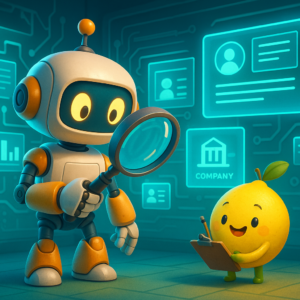
The Island Problem
Here is a common frustration that many businesses face today: You invest in an expensive, cutting-edge AI tool. It writes Shakespearean emails and summarizes 50-page PDFs in seconds. But when you ask it a simple operational question like, “How much inventory of Widget X do we have left in the New York warehouse?”, it fails.
It might hallucinate a number, say “I don’t know,” or give you a generic definition of a warehouse.
Why does this happen? Because your AI is stranded on an island.
Your valuable data lives on the mainland—trapped inside your business systems like Salesforce, NetSuite, Workday, SAP, or Oracle. If your AI cannot build a bridge to that data, it is just a toy, not a tool. To drive real enterprise value, your AI needs to get its hands dirty in your actual operations.
Moving Beyond Chat to Action
When you integrate AI with your enterprise stack, the agent stops being a passive observer and becomes an active participant. Consider the difference in workflow:
- Scenario A (Without Integration): A customer asks, “Check the status of Order #1234.” The AI responds, “I cannot check that information. Please log into the portal.”
- Result: The user switches tabs, logs into a slow system, navigates three menus, and interprets the code. This wastes 10 minutes.
- Scenario B (With Integration): A customer asks, “Check the status of Order #1234.” The AI responds, “Checking NetSuite… Order #1234 is currently in the ‘Packing’ stage. It is scheduled to ship via FedEx tomorrow. Shall I email the customer a shipping update?”
- Result: The task is completed in 10 seconds, and the user stays in the flow.
The Three Layers of Integration
How do you build this bridge? It requires thinking about how AI interfaces with your business systems across three distinct layers:
- The API Layer (The Handshake): Every modern platform has an API (Application Programming Interface). This is the digital door that allows software to talk to other software. You need to verify that your AI platform supports the specific authentication methods your systems require, such as OAuth2 or API Keys. This is the secure handshake that lets the AI in the door.
- The Data Layer (The Brain): To prevent hallucinations, you need “Grounding.” This means pointing the AI to your specific structured data (rows and columns in SQL) and unstructured data (PDF contracts and emails). Technologies like Databricks Agent Bricks allow agents to reason over both simultaneously.
- The Action Layer (The Muscle): This is where the magic happens. The AI needs permission to write data, not just read it. This allows it to update a CRM record, create a Jura ticket, or approve an expense report.
How to Build an Integrated Lemonade
LaunchLemonade is designed to handle these connections without forcing you to write complex code from scratch.
- Create a New Lemonade: Start a fresh agent and define the role, for example, “Sales Operations Assistant.”
- Upload Knowledge: Upload your API documentation. This teaches the model the specific structure of your database fields (e.g., instructing it that the email field is labeled
contact_email). - Make Clear Instructions (RCOTE):
- Objective: Update lead status based on email interactions.
- Tasks: Read incoming email content. Analyze user sentiment. Connect to the CRM via API. If sentiment is positive, change status to ‘Qualified’ and update the lead score.
- Expected Output: A confirmation log of the updated record.
- Test: Run a simulation to ensure the specific fields populate correctly.
Security: The Gatekeeper
Opening up your business systems to an AI agent sounds scary to a CISO (Chief Information Security Officer), and rightfully so. You need strong gates.
- Least Privilege: Never give the AI “Admin” access. Create a specific user role for the agent that can only access the data it definitely needs.
- Read vs. Write: Be careful with Write permissions. Start with an agent that can only read data and draft suggested changes for human approval.
- Audit Logs: Every time the agent touches your ERP, it must leave a footprint. You need to know exactly who changed a record and when.
Start with the Swivel Chair Tasks
Do not try to automate your entire supply chain overnight. Look for “swivel chair” processes—tasks where a human has to switch from one screen (like an inbox) to another just to copy-paste information.
Examples include taking data from a PDF invoice and entering it into accounting software, or taking new hire form data and manually inputting it into payroll. These are the quick wins. They prove the bridge works and eliminate the manual entry into your business systems that slows your team down.
Connect your systems today. [Book a demo]