How an Internal AI Assistant Watched Our Workflow and Made Our Team 10x Smarter
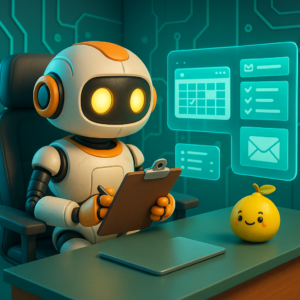
As a business owner, I am always seeking new ways to enhance my team’s efficiency and productivity. We’ve experimented with various tools, but nothing prepared me for the transformative impact of an internal AI assistant that literally “watched” our workflow. This AI assistant, quietly observing our daily operations, began to identify patterns, pinpoint bottlenecks, and offer insights that were simply impossible for us to uncover manually. It wasn’t about surveillance, but about precise, data-driven optimization, leading to a leaner, smarter, and more productive team.
This experience fundamentally changed how we approach process improvement, moving from reactive problem solving to proactive, AI-driven optimization with our internal AI assistant.
The Problem: Invisible Inefficiencies
Every team, regardless of how well-managed, develops subtle inefficiencies over time. These aren’t always glaring errors; often, they are small delays, repetitive manual steps, or suboptimal hand-offs that, individually, seem negligible but collectively drain hours and resources. As a team leader, my perspective was often limited to specific outcomes or periodic check-ins. I knew we could be better, but identifying how to be better felt like finding a needle in a haystack.
We needed a tool that could observe objectively, identify patterns across vast amounts of data, and provide actionable recommendations. We needed an internal AI assistant.
Deploying the Internal AI Assistant
Our initial implementation involved integrating an internal AI assistant, built on a no-code platform, with our existing collaboration and project management tools. This AI was given a specific mandate: to learn our workflow. It connected to:
-
Project Management Software: To track task assignments, progress, and dependencies.
-
Communication Platforms: To analyze discussions around tasks, decisions, and roadblocks.
-
Document Management Systems: To understand how information flowed and was accessed.
-
Time Tracking Tools: To correlate time spent with actual task completion.
The key was giving the internal AI assistant permission to “read” our digital breadcrumbs and understand the operational narrative.
What the Internal AI Assistant “Saw”
Over a few weeks, the internal AI assistant gathered data, silently observing how tasks moved from conception to completion. It didn’t intervene directly at first, but simply learned the rhythm of our work. The insights it began to generate were eye-opening:
-
Hidden Bottlenecks: The internal AI assistant identified specific individuals or stages within a project where tasks consistently piled up or experienced significant delays. These weren’t always the obvious points, but often subtle points of friction. For example, it noted a recurring delay in content approval that impacted subsequent marketing activities.
-
Repetitive Manual Tasks: It flagged instances where team members were consistently performing the same manual data entry, formatting, or information retrieval tasks that could easily be automated. This was a classic case of “everyone knows it’s annoying, but no one has time to fix it.”
-
Suboptimal Communication Loops: The internal AI assistant highlighted long email threads or chat discussions where decisions were unclear or took multiple iterations to reach. It could discern when conversations were looping or lacking critical information.
-
Resource Misalignment: It suggested instances where certain tasks were assigned to individuals who might not have been the most efficient choice, or where a different skill set could accelerate completion.
-
Underutilized Knowledge: The internal AI assistant found that relevant documents or past solutions were often “rediscovered” because they weren’t easily accessible or referenced, leading to duplicated effort.
From Observation to Optimization: The AI’s Recommendations
After its learning phase, the internal AI assistant transitioned from passive observation to active recommendation. It presented its findings in clear, actionable reports, sometimes directly integrated into our project dashboards.
-
Automated Content Approval Workflow: For the content approval bottleneck, the internal AI assistant recommended a simple automation. Upon submission, content would automatically be routed to the next approver, with automated reminders if not reviewed within a set timeframe.
-
Data Entry Automation Agent: For repetitive data entry, the internal AI assistant proposed building a micro-agent that could extract information from incoming documents and populate our CRM, saving hours each week.
-
Knowledge Base Integration: To combat underutilized knowledge, the internal AI assistant suggested a centralized, searchable knowledge base. It even identified key terms from our communications that should be tagged as categories in the knowledge base.
-
Improved Meeting Agendas: It was observed that many meetings lacked clear agendas and objectives. Moving forward, the internal AI assistant began to suggest agenda items based on outstanding tasks and discussions from our project management system.
The Impact: A Smarter, Leaner Team
The implementation of these AI-driven recommendations led to significant improvements:
-
Increased Productivity: Tasks flowed more smoothly, with fewer delays and less manual grunt work. My team could focus on higher-value activities.
-
Enhanced Communication: Clearer communication structures emerged, reducing misinterpretations and decision-making time.
-
Better Resource Allocation: Tasks were optimized for the right skills, and precious human time was used more effectively.
-
Proactive Problem Solving: We moved from reacting to problems after they occurred to proactively addressing potential issues before they escalated.
-
Empowered Employees: My team felt supported by the internal AI assistant, seeing it as a tool that removed friction from their day, rather than a threat. They appreciated that it freed them to do the more interesting and creative aspects of their jobs.
Deploying an internal AI assistant that watches your team’s workflow might sound futuristic, but it’s a powerful, tangible reality today. It’s about leveraging objective data and advanced pattern recognition to create a continually optimizing operational environment. The result is a team that not only works harder but also works significantly smarter.
To stay updated with us, please follow our Facebook, Instagram, LinkedIn, Threads, TikTok, X, and YouTube pages.