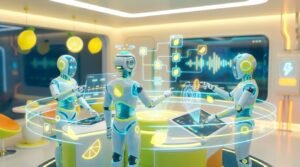
How to Build a Hybrid Workflow: Humans and AI in Parallel
The future of productive teams doesn’t lie in replacing humans with AI. Instead, it thrives in a symbiotic relationship where humans and AI agents work together—often in parallel. This hybrid workflow merges the best of both worlds: human creativity, critical thinking, and emotional intelligence combine with AI’s speed, precision, and tireless execution. Building this kind of workflow is a strategic choice that can dramatically boost efficiency, accuracy, and innovation.
This approach recognizes that humans excel at some tasks, while AI dominates others. The key is designing a balanced workflow where each strength complements the other.
Understanding the Hybrid Workflow Philosophy
A hybrid workflow is far more than occasionally using an AI tool. It’s a deliberately designed process where tasks are divided intelligently and often run concurrently. The AI agent handles data-heavy, repetitive, or predictive tasks. Meanwhile, the human focuses on decision-making, exception handling, strategy, and communication.
In a parallel hybrid model, both the human and AI can work on related aspects of a task at the same time. This setup allows for real-time validation and faster progress. Most importantly, this collaboration focuses on augmentation—making humans smarter and more effective, not replacing them.
Key Principles for Building a Hybrid Workflow
1. Identify Complementary Strengths
AI Strengths: Data processing, pattern recognition, prediction, rapid generation, automated execution, 24/7 availability, consistency.
Human Strengths: Creativity, empathy, complex problem-solving, ethical judgment, strategic thinking, emotional intelligence, contextual understanding.
Design Challenge: Match each task with the right agent—human or AI.
2. Define Clear Interfaces and Handoff Points
Decide how humans and AI will interact and transfer tasks. These handoffs must be seamless.
Identify where humans provide input, where AI offers drafts or analysis, and where the final human review occurs.
3. Embrace Parallel Processing
Look for moments where humans and AI can work concurrently. For instance, while the human refines a client strategy, the AI can generate personalized outreach based on initial inputs. This division ensures speed without sacrificing personalization.
4. Prioritize Transparency and Explainability
Transparency builds trust. Humans need to understand how the AI reached a conclusion or performed a task. Therefore, adopt AI tools that explain their reasoning or show their data sources. A transparent AI agent becomes invaluable in a hybrid workflow.
5. Iterate and Optimize
Hybrid workflows evolve. Regularly collect feedback from team members and monitor AI performance. Based on insights, adjust roles, refine instructions, and strengthen integration points. This continuous loop keeps the system aligned with business goals.
Steps to Build a Hybrid Workflow (Example: Sales Outreach)
Let’s illustrate this with a sales team example, where personalized outreach meets productivity.
Traditional (Human-Only) Workflow:
SDR researches prospect → drafts personalized email → sends email → books meeting → updates CRM.
Hybrid Workflow (Humans + AI Agents in Parallel)
1. Task Decomposition and Specialization
- Human Role: Strategic decision-making, relationship building, negotiation, and final personalization.
- AI Agent Roles: Data collection, initial drafting, basic qualification, scheduling, and CRM updates.
2. Design the Parallel Process
A: Pre-Outreach Intelligence (AI Agent)
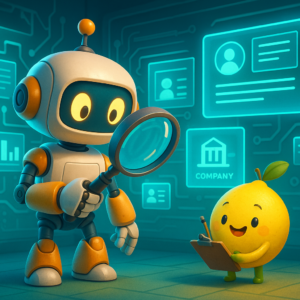
- Step 1 (AI Prospect Researcher): Integrates with lead lists and public data sources such as LinkedIn or company websites. It gathers company news, key personnel, industry trends, and pain points.
- Step 2 (AI Personalization Drafter): Uses this intelligence and predefined sales playbooks to create a personalized outreach draft. It leaves space for human input and tone adjustments.
B: Strategic Human Review & Send (Human)
- Step 3 (SDR): While AI agents research and draft, the SDR reviews past interactions and strategizes.
- Step 4 (SDR): Reviews the AI-generated draft, adds personal insights, fine-tunes the tone, and sends the message.
C: Automated Follow-Up & Qualification (AI + Human)
- Step 5 (AI Follow-Up Sequencer): If no reply arrives, the AI sends follow-ups with built-in pauses.
- Step 6 (AI Qualifier): When a response comes, it identifies intent—ready, not ready, or wrong contact—and routes the lead.
- Step 7 (Human SDR): Handles high-value or complex responses and schedules meetings.
- Step 8 (AI CRM Updater): Automatically logs all actions and updates lead status.
Benefits of This Hybrid Workflow
- Maximized Efficiency: SDRs spend more time engaging prospects and less time on repetitive tasks.
- Enhanced Personalization at Scale: AI handles the groundwork so humans can focus on meaningful customization.
- Faster Response Times: AI-driven follow-ups accelerate conversions.
- Reduced Errors: Automation ensures consistency in data and communication.
- Continuous Improvement: Feedback loops enhance performance for both AI and humans.
Building a hybrid workflow is an investment in your team’s long-term effectiveness. It’s about creating a partnership that blends human creativity with AI precision. When designed well, this collaboration fuels productivity, accuracy, and innovation across the organization.
To stay updated with us, please follow our Facebook, Instagram, LinkedIn, Threads, TikTok, X, and YouTube pages.