
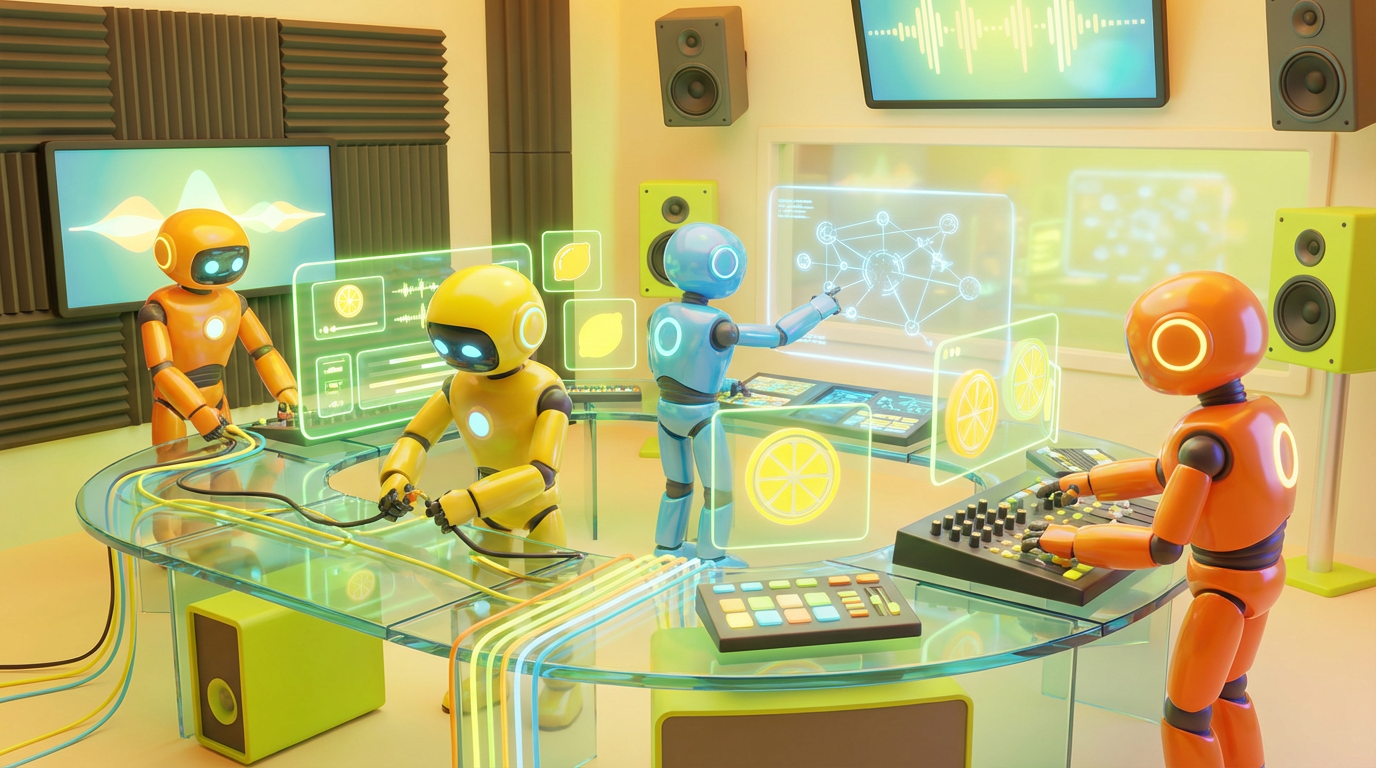
In any growing organization, cross-team collaboration is a double-edged sword. While essential for complex projects and holistic customer experiences, it often devolves into chaos: miscommunications, dropped balls, delayed handoffs, and endless email chains. This inter-departmental friction not only saps productivity but also frustrates employees and impacts project timelines. The traditional methods of countless meetings and manual follow-ups are no longer sufficient to fix cross-team chaos. The solution lies in leveraging AI coordination, which can act as an intelligent orchestrator, streamlining communication and automating processes across your entire organization.
AI coordination transforms chaotic handoffs into seamless workflows, ensuring every team stays aligned and informed.
The Anatomy of Cross-Team Chaos
Before we fix cross-team chaos, it’s crucial to understand its root causes:
-
Communication Silos: Each team has its preferred tools and communication styles, leading to fractured information.
-
Misaligned Priorities: What’s urgent for one team might be low priority for another, causing delays.
-
Manual Handoffs: Tasks transitioning from one department to another often require manual updates, leading to errors and dropped tasks.
-
Lack of Context: Teams frequently receive tasks without full context, requiring repetitive questions and slowing down progress.
-
Blame Game: When things go wrong, it’s hard to pinpoint where the breakdown occurred, fostering a culture of finger-pointing rather than problem-solving.
This chaos isn’t just annoying; it directly impacts project delivery, customer satisfaction, and overall business growth.
The Role of AI Coordination in Fixing Cross-Team Chaos
AI coordination works by observing, understanding, and actively managing the flow of tasks and information between different teams. It acts as a neutral, always-on project manager, ensuring that every piece of the puzzle fits together smoothly. This is achieved through specialized AI agents designed to facilitate inter-departmental processes.
1. Intelligent Hand-off Management
-
How AI Helps: When a task is completed by Team A and needs to move to Team B, an AI agent can automatically trigger the next step. It can check for completeness, gather relevant information, and formally “hand off” the task to the next team’s system, complete with all necessary context.
-
Example: A sales team closes a deal. An AI agent automatically extracts key client details from the CRM, creates a new project card in the operations team’s project management tool, notifies the relevant ops lead, and provides a summary of client requirements.
-
Impact: Eliminates manual administrative work, reduces delays, and ensures tasks move forward seamlessly, which is key to fixing cross-team chaos.
2. Cross-Platform Communication Synthesis
-
How AI Helps: Teams use different tools (Slack, Teams, project management software, email). An AI agent can monitor these various platforms, identify critical information related to a project, and synthesize it into a unified view for all stakeholders.
-
Example: An AI agent monitors a Slack channel for development updates, a Trello board for marketing tasks, and a shared document for client feedback. It then generates a daily digest for the project manager, highlighting progress, key decisions, and potential blockers from all sources.
-
Impact: Reduces information silos, ensures everyone has the necessary context, and minimizes repetitive communication, a vital step to fix cross-team chaos.
3. Proactive Conflict and Bottleneck Identification
-
How AI Helps: An AI agent can analyze project timelines, identify dependencies, and flag potential conflicts or bottlenecks before they occur. It can also detect if one team is consistently behind schedule, impacting upstream or downstream teams.
-
Example: An AI agent observes that the content team consistently misses deadlines, which will impact the marketing team’s campaign launch. It proactively alerts both team leads with a warning and suggests potential mitigation strategies.
-
Impact: Enables proactive problem-solving, prevents cascading delays, and fosters accountability across teams.
4. Automated Context Provisioning
-
How AI Helps: When a team receives a task, they often need historical data, client background, or relevant documents. An AI agent can automatically pull and attach this context to the task, preventing “context switching” and reducing the need for repetitive questions.
-
Example: The legal team receives a contract for review. An AI agent automatically attaches the client’s historical engagement summary, previous contract versions, and relevant internal policy documents to the review request.
-
Impact: Speeds up task completion, reduces frustration, and ensures decisions are made with complete information.
Building Your AI Coordination Agents with LaunchLemonade
You can build these powerful AI coordination agents using no-code platforms.
-
Create a New Lemonade: Start with an “Orchestrator Agent” for a specific cross-team workflow.
-
Define the Workflow: Map out the exact steps a task takes across teams, noting all handoffs and decision points.
-
Instruct the AI Agent (RCOTE):
-
Role: Cross-Team Workflow Orchestrator.
-
Context: Manage tasks moving between Team A and Team B.
-
Objective: Ensure seamless, timely, and well-contextualized handoffs.
-
Tasks: Monitor Team A’s completion of Task X, extract specific data (e.g., client name, project ID), create Task Y for Team B, attach extracted data as context, and notify Team B Lead.
-
Expected Output: Automated task creation in Team B’s system, with attached summary and notification.
-
-
Integrate: Connect the AI agent to the various tools teams use (CRM, project management, communication platforms) via available integrations.
-
Pilot and Iterate: Start with one cross-team workflow. Monitor its effectiveness, gather feedback, and continuously refine the AI agent’s instructions and integrations.
The Outcome: A Culture of Seamless Collaboration
Fixing cross-team chaos with AI coordination is about more than just automation, it’s about building a foundation for truly collaborative and efficient work. It reduces friction, minimizes miscommunication, and frees your teams to focus on their core competencies. The result is faster project delivery, happier employees, and a more agile organization ready to tackle complex challenges with synchronized precision.
To stay updated with us, please follow our Facebook, Instagram, LinkedIn, Threads, TikTok, X, and YouTube pages.



