
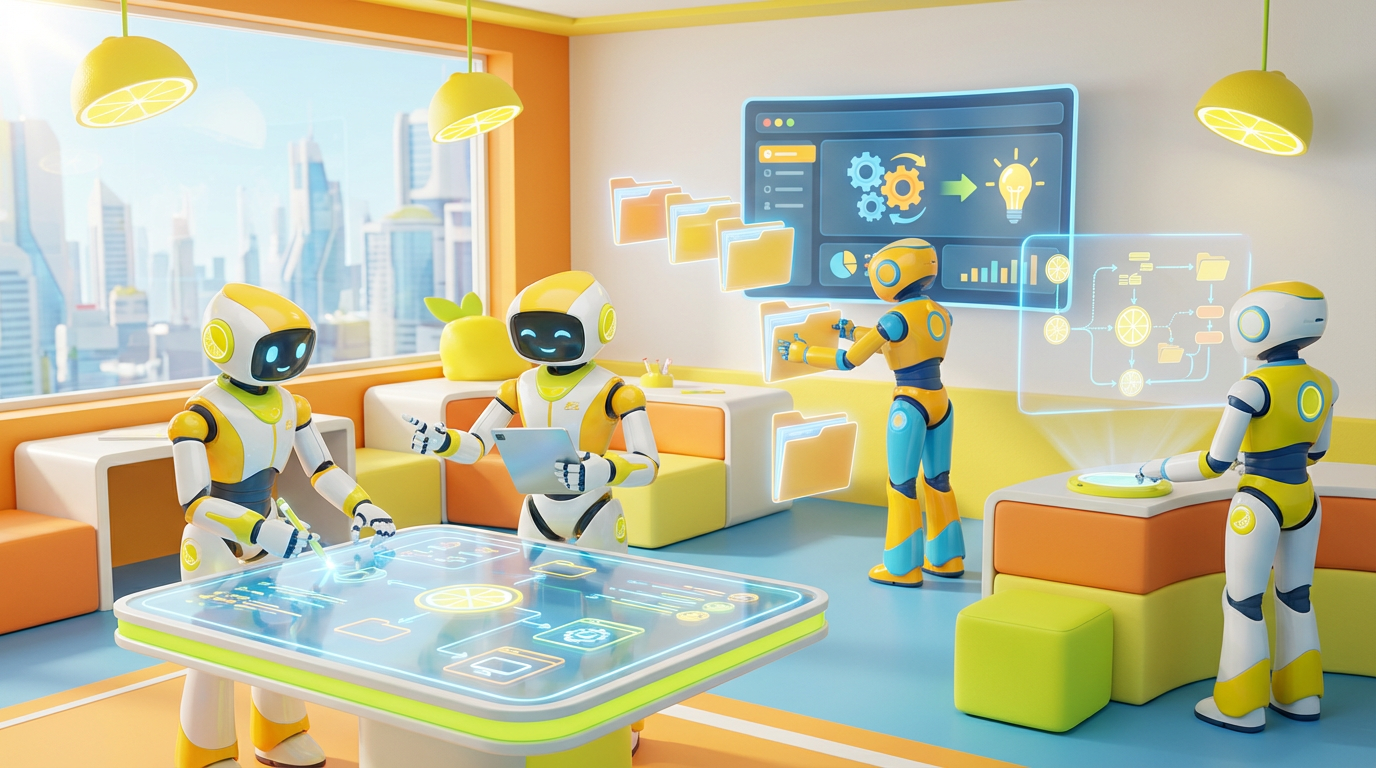
Many teams find themselves trapped in a cycle of manual, repetitive tasks that drain energy, stifle innovation, and lead to burnout. Our team was no different. We spent countless hours on data entry, routine communications, information retrieval, and other administrative drudgery. The desire for change was strong, but the path from these inefficient manual workflows to intelligent workflows seemed daunting. We embarked on a journey to integrate AI agents into our daily operations, transforming our labor-intensive processes into streamlined, intelligent workflows. This transition dramatically boosted our team’s productivity, accuracy, and overall job satisfaction.
The key was not to automate everything at once, but to strategically identify high-impact areas and implement AI progressively to shift from manual to intelligent workflows.
The Starting Point: A Manual Maze
Our workflow was characterized by several common pain points:
-
Excessive Manual Data Entry: Project updates, client details, and report generation heavily relied on copying and pasting between spreadsheets and various platforms.
-
Repetitive Communication: Crafting similar emails for clients, partners, and internal stakeholders consumed significant time.
-
Information Retrieval Bottlenecks: Finding specific details from a sprawling internal knowledge base or past project files often took too long, leading to delays and duplicated efforts.
-
Approval Delays: Simple approval processes were manual, often requiring multiple human touchpoints and leading to bottlenecks.
-
Burnout: Team members felt bogged down by administrative tasks, leaving less time for creative or strategic work.
We realized that this manual on intelligent workflows was essential for our growth and our team’s well-being.
Phase 1: Identifying High-Impact, Repetitive Tasks
Our first step was to conduct an internal audit to identify the most significant bottlenecks and repetitive tasks. We involved the whole team in this process. Everyone was encouraged to list the “drudgery” tasks they wished they didn’t have to do. We then prioritized these based on frequency, time consumption, and potential for human error.
Examples of tasks identified:
-
Client Onboarding: Manually verifying client information and setting up new accounts.
-
Marketing Content Generation: Drafting social media posts and blog outlines.
-
Internal Meeting Summaries: Taking and distributing notes, extracting, and assigning action items.
-
Customer Support Triage: Categorizing incoming support tickets and providing initial responses.
This selection focused on tasks that were ripe for automation, promising a clear path from manual to intelligent workflows.
Phase 2: Building the First AI Agent Iteration (Micro-Agents)
Instead of a monolithic AI system, we started by building small, focused “micro-agents” for individual tasks using a no-code AI platform like LaunchLemonade. This allowed for quick wins and low-risk experimentation.
One: Client Onboarding Assistant
-
AI Agent’s Task: Verify basic client information upon submission, create a new entry in our CRM, and send a personalized welcome email including a link to an onboarding packet.
-
Impact: Reduced manual data entry errors by 80% and cut onboarding time from 2 hours to 15 minutes per client. The journey from manual to intelligent workflows began here.
Two: Social Media Content Drafter
-
AI Agent’s Task: Based on a given topic and desired tone, draft 3-5 social media posts for different platforms (LinkedIn, X, Instagram) and suggest relevant hashtags.
-
Impact: Marketing team saved 5-7 hours per week on initial content drafting, allowing them to focus on strategy and engagement.
Three: Meeting Minutes Summarizer
-
AI Agent’s Task: Receive a meeting transcript (from Zoom/Google Meet), summarize key discussions, and extract all explicitly stated action items and assignees.
-
Impact: Eliminates the need for a dedicated note-taker, ensures all team members have access to concise summaries, and improves accountability for action items. This significantly streamlined our manual to intelligent workflows.
Phase 3: Integration and Human-in-the-Loop Implementation
A critical aspect of our transition from manual to intelligent workflows was designing for effective human-AI collaboration. The AI agents were integrated into our existing tools, and clear “human-in-the-loop” protocols were established.
-
Human Oversight: For every AI-generated output (e.g., emails, summaries), a human team member was designated for review and final approval. The AI drafted, the human verified.
-
Feedback Mechanism: Team members could easily provide feedback to the AI agents (“This summary missed X,” “This email needs a warmer tone”), which was used to continuously refine the AI’s instructions and knowledge base.
-
Seamless Hand-off: For complex issues beyond the AI’s scope, the intelligent workflows were designed to hand off to a human team member with all relevant context. For example, the Customer Support Triage agent would categorize severe issues and directly notify the human support manager.
Phase 4: Measuring Impact and Iterating
Over 6 months, we rigorously measured the impact of our intelligent workflows.
-
Quantifiable Results: We saw a 30% reduction in time spent on administrative tasks across the board, a 20% increase in content output, and a significant decrease in communication noise.
-
Qualitative Benefits: Team morale improved as members shifted from mind-numbing repetition to more engaging, strategic work. Accuracy increased due to AI’s consistent execution, and decision-making was faster with readily available information.
-
Continuous Improvement: Feedback loops from human users and performance data from the AI agents allowed us to continually refine and expand our intelligent workflows. New micro-agents were developed for other identified pain points, further accelerating our journey from manual to intelligent workflows.
Our journey from manual to intelligent workflows taught us that successful AI integration is an ongoing process. It requires focusing on specific problems, starting small with flexible tools, prioritizing human-AI collaboration, and committing to continuous improvement. The result is a team that is not only more productive but also more satisfied, empowered to innovate rather than being bogged down by the mundane.
To stay updated with us, please follow our Facebook, Instagram, LinkedIn, Threads, TikTok, X, and YouTube pages.



